They Banned DEIB Words — We Code-Switch and Keep Going.
By: Jess Ayden Li, Co-Founder & Principal Consultant
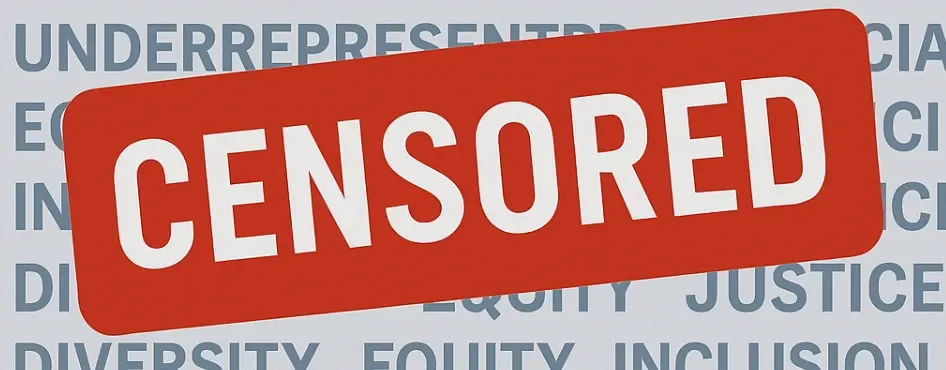
A red rectangle with the word “CENSORED” in bold white capital letters is placed over a background of partially obscured words like “UNDERREPRESENTED,” “DIVERSITY,” “EQUITY,” “INCLUSION,” and “JUSTICE” in gray-blue text, suggesting the censorship of topics related to social justice and equity.
We’re living in a time where even the words we use to describe civil rights and human rights are being targeted. “Diversity.” “Equity.” “Inclusion.” “Belonging.” These aren’t just buzzwords — they are the foundation of the work many of us in the nonprofit sector do. They represent commitments to human dignity, to community, and to liberation.
But now, these words are being banned. In grant guidelines. In legislation. In school curriculums. Even in some boardrooms.
But let’s just be clear: values don’t disappear just because the words do. At Healing Equity United, we see what’s happening. Nonprofit organizations—especially those that rely on public funding—are scrambling to figure out how to keep their doors open and stay aligned with their values.
So we did what we always do: we got creative. And we did what we were always taught to do. We code-switched.
We pulled together a list of powerful alternatives.
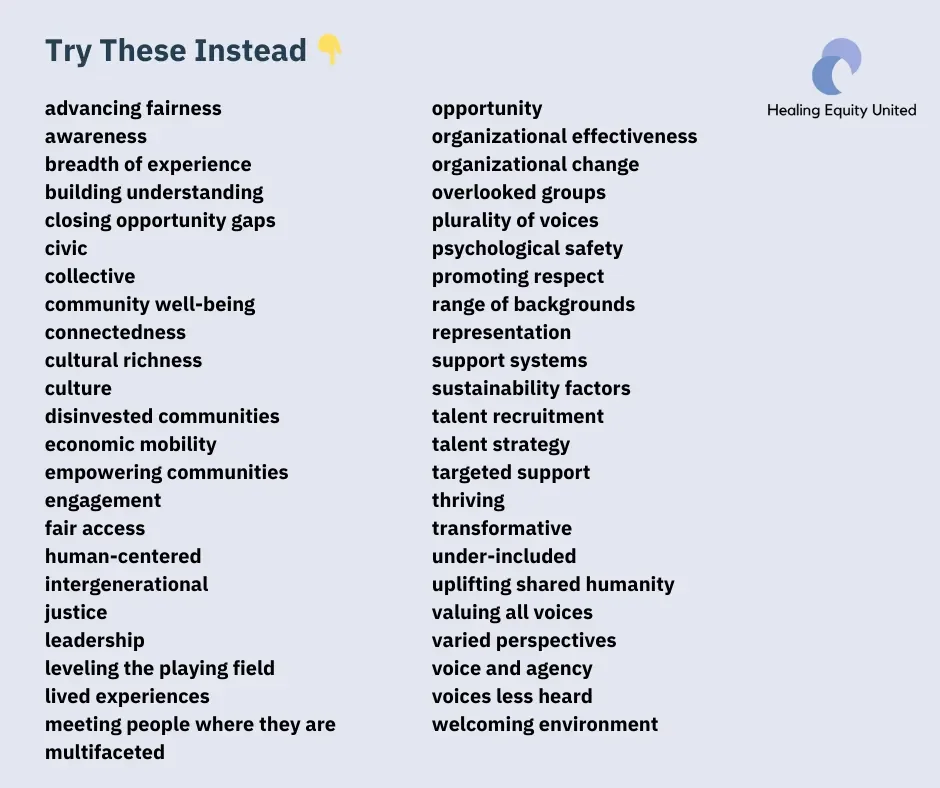
📆 We made this list on March 26, 2025. As of then, you can use these in your funding proposals, your strategic plans, your team retreats, your website copy — wherever you need to adapt without compromising your soul.
❗️We know things are changing fast. Guidelines shift. Politics escalate. The attacks get sharper. So we’ll keep updating it — and we want your help.
✨ Seen new terms that are being restricted?
✨ Found other alternatives that work in your org or field?
Direct message us. Let’s build this list together.
Because we’re not backing down. We’re doubling down.
Our language might shift. But our commitments? Our community? They’re not going anywhere.
Let’s keep doing the work — no matter what they call it.