Healing Through Action: Confronting Collective Trauma with Community Care
By: Cassie Whitebread, Senior Consultant
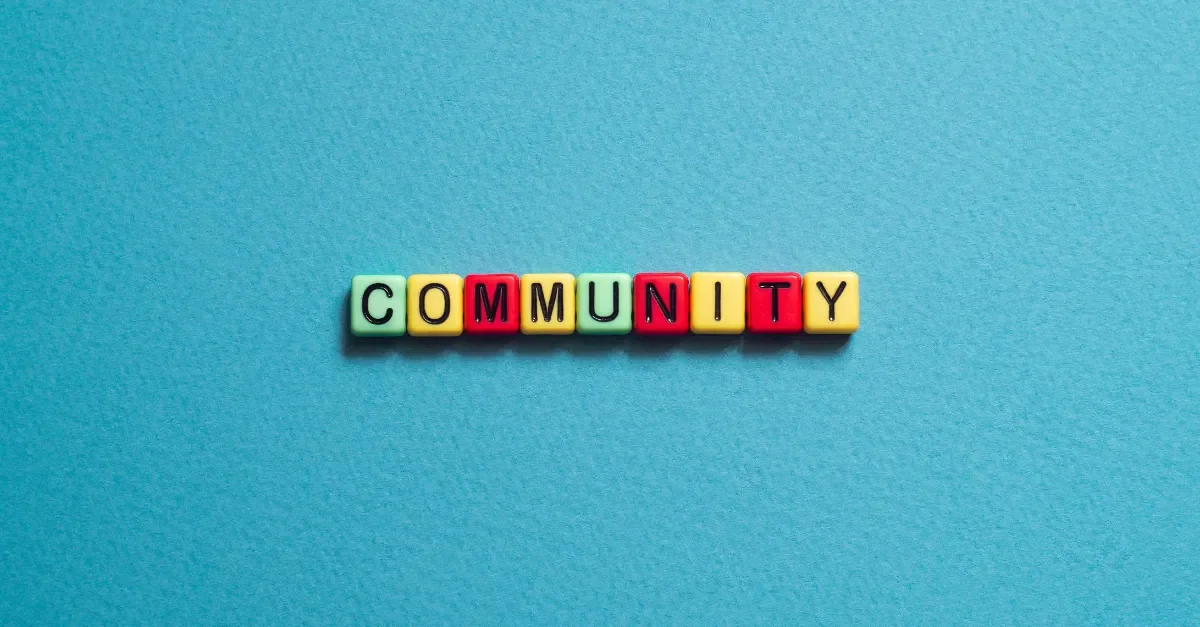
Square-shaped green, yellow, and red beads spelling out the word “community” with a turquoise background.
We know the last few weeks have felt like a rollercoaster, leaving many of us reeling, angry, confused, and exhausted. But we cannot afford to stay silent or still. We are not powerless. Our communities need us now more than ever, and each of us has a vital role to play in creating the change we need to see. Healing and resistance go hand in hand, and now more than ever, we must root into community care and collective action.
First, Let’s Be Real
Let’s acknowledge the weight of this moment — the fear, the confusion, the uncertainty that’s been keeping us up at night. These feelings aren’t just valid — they’re a natural response to the chaos around us. But here’s the truth: our communities have faced immense challenges before, and we’ve overcome them. We will again. Take a moment to acknowledge the emotional and psychological toll on you and others in your community. Healing begins with recognition, and it flourishes in community.
This Isn’t Just About Self-Care — It’s About Collective Care
Forget what capitalism has taught you about individualism. This moment demands collective action and community care. As Leah Lakshmi Piepzna-Samarasinha reminds us, we need to build spaces “where people feel fine if they get sick, cry, have needs, start late because the bus broke down, move slower–and these aren’t things we apologize for.”
Here’s what that looks like in practice:
Check on your neighbors, especially those most impacted by current policies
Join or support local mutual aid networks
Share resources, time, and skills without expecting anything in return
Create community support systems that will last beyond the current crisis
Give grace a little bit more grace than usual; we’re all experiencing this current moment in different ways
Take Direct Action Now
The time for passive concern is over. Here’s how you can step up:
Stay Informed and Share the Truth
Combat misinformation actively
Share verified information from trusted grassroots sources
Amplify marginalized voices and perspectives
2. Use Your Voice
Show up to local meetings and make your voice heard
Join protests and community gatherings
Write letters, make calls, send emails to your representatives — be relentless in demanding accountability
3. Support Local Grassroots Movements
Donate to PGM-led organizations
Volunteer your time and skills
Show up consistently, not just when it’s convenient
Be intentional about where you’re spending your dollars–support local, marginalized business owners
Build Sustainable Resistance
As adrienne maree brown teaches us, “When we speak of systemic change, we need to be fractal.” This means:
Creating patterns of resistance that can scale from individual to community level–how are you building up resistance in yourself and your inner circles?
Understanding that small actions ripple outward to create larger change
Building sustainable movements that can weather long-term struggles
Connecting local actions to broader systemic transformation
Take Care of Each Other
Yes, the work is urgent — but we need to sustain ourselves and each other for the long haul. Remember:
Set boundaries when you need a break
Connect with your community for support and joy
Limit news intake when you’re overwhelmed
Rest is a form of resistance (thank you, Tricia Hersey)
Remember what Grace Lee Boggs said: “We never know how our small activities will affect others through the invisible fabric of our connectedness. In this exquisitely connected world, it’s never a question of ‘critical mass.’ It’s always about critical connections.”
Your Call to Action
The time is now. Here’s what you can do today:
Commit to one concrete action from this article
Share this article with your networks
Connect with local organizers and activists
Start building and/or joining community care networks
Show up for your community in whatever way you can
As Robin Wall Kimmerer reminds us, we need to build a society “where the currency of exchange is gratitude and the infinitely renewable resource of kindness, which multiplies every time it is shared.”
We are in this together. The only way forward is through collective action, community care, and sustained resistance. What will you commit to today?
A colorful mural of lotus flowers in pink, red, and yellow, surrounded by green leaves. The flowers are depicted in different stages of bloom, with some fully open and others still budding.