The Pay Crisis: Nonprofit Workers Deserve More than Poverty Wages
By: Jess Ayden Li, Co-Founder & Principal Consultant
What Was Your First Nonprofit Salary?
Mine was $30k for a full-time salaried position, and I still qualified for food stamps. To make ends meet, I worked two part-time jobs on top of my full-time role at an international nonprofit with a $71 million budget for U.S. programs and $301 million globally. My monthly budget broke down like this:
Rent in Washington, D.C.: 50%
Gas for Commuting: 20%
Student Loan Payments: 10%
That left me with just $20 per week for food.

Photo by Kenny Eliason on Unsplash
Nonprofit employees shouldn’t have to live like this. While nonprofit salaries have increased over the past few years, we have a long way to go. A new report from the Independent Sector and United for ALICE found that 22% of nonprofit employees still live in households that can’t afford the basics — things like housing, food, and healthcare. When you look at it through a Diversity, Equity, Inclusion, and Belonging (DEIB) lens, the disparities are even more glaring. Black and Hispanic nonprofit employees struggle at twice the rate of white workers to make ends meet. These are the very people who are often working on the frontlines of systemic inequities in our communities, yet they are disproportionately impacted by the very struggles they work to alleviate.
We need to do better.
It’s not enough to focus on the external impact of our programs while ignoring the internal realities of our staff. We must raise nonprofit salaries to a living wage and educate our funders about what it truly means to support our teams — especially those who have personally experienced the issues we work to address. This is not just a staffing or retention issue; it’s a matter of justice.
At Healing Equity United, we emphasize the need to align our values with our actions. Supporting employee financial well-being is part of that alignment. It’s about honoring the lived experiences of our staff, particularly BIPOC employees, who often bring a personal understanding and lived experiences of the injustices our organizations are fighting to address. Yet, they remain undervalued and underpaid in the sector. This is where we, as leaders, must step up.
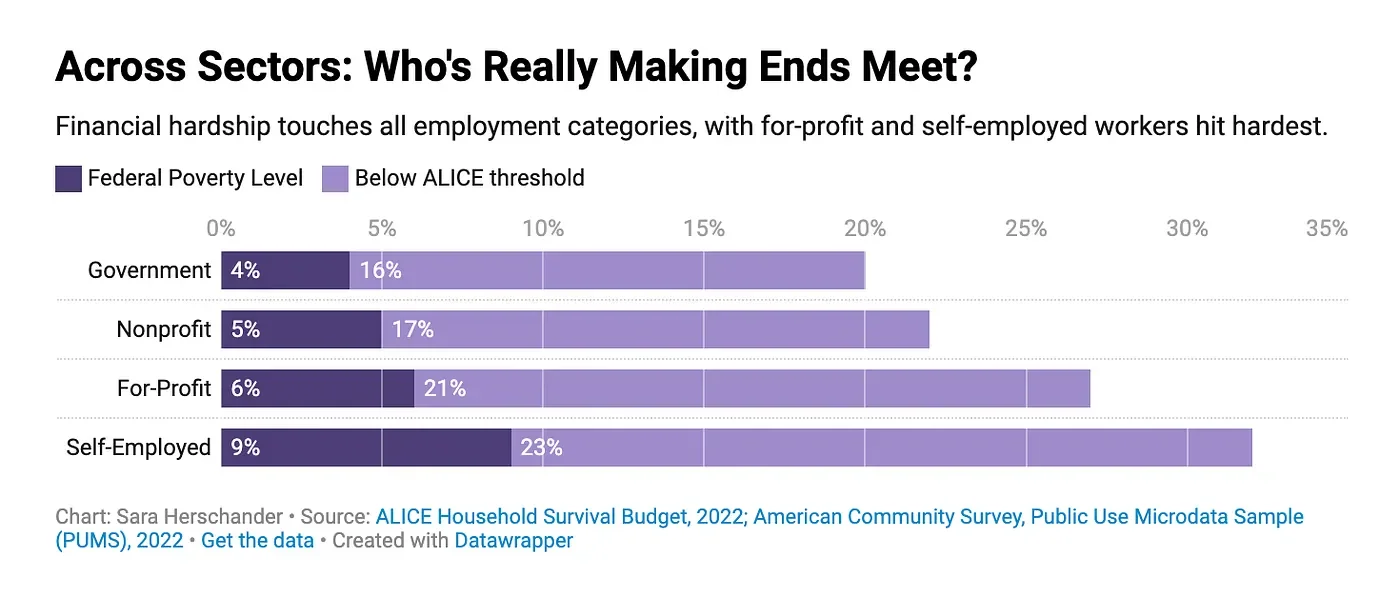
As Executive Directors and nonprofit leaders, we have to take a hard look at the pay structures within our organizations. We must close the pay gap between senior leadership and those at the grassroots level. It’s unacceptable that senior staff earn significantly more while frontline workers — many of whom are BIPOC and women — are struggling to pay rent or feed their families.
We also need to stop the practice of creating new positions to ‘serve more people’ if we can’t adequately compensate the staff we already have. We can’t keep expanding our impact at the cost of our team’s financial well-being. If we are serious about our commitment to DEIB, we need to focus on equity within our own organizations first.
Living Our Values in the Workplace
Supporting employee financial well-being is not just about retention. It’s about living up to the values we claim to hold as nonprofit leaders. If we truly believe in social justice, equity, and inclusion, we must extend those principles to the very people who make our work possible.
Funders need to understand that when they invest in our organizations, they also invest in our people and our communities. And it’s our responsibility to advocate for funding that supports living wages and equitable pay structures. It’s not a ‘nice to have’; it’s essential.
We need to do better by our employees, especially those who come to this work with a deep, personal connection to the issues at hand. And we, as leaders, must hold ourselves accountable for creating workplaces that reflect the values we fight for every day.