Standing Against the War on Immigrants: A Call to Action
By: Jess Ayden Li, Co-Founder & Principal Consultant
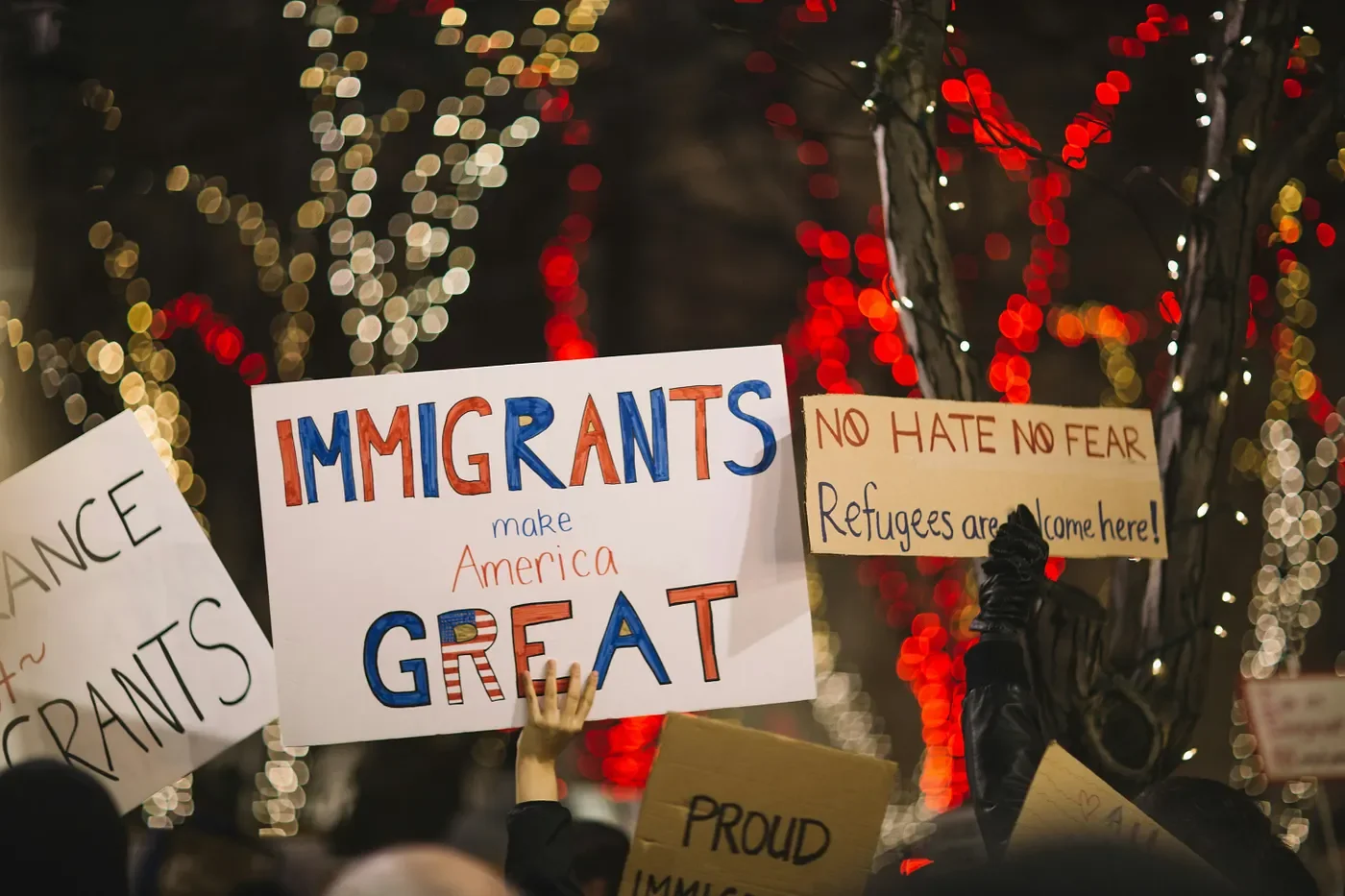
Photo by Nitish Meena on Unsplash
If you’re still not sure whether the Trump administration is at war with immigrants, just look at Los Angeles today. The last time a U.S. President called in the National Guard without the support of state and local officials was during the Civil Rights movement, when President Lyndon B. Johnson called in federal forces to protect Civil Rights protestors. The parallel is unmistakable and deeply disturbing.
A few weeks ago, I attended my Congresswoman Lateefah Simon’s (D-California) town hall. She opened by addressing the “War on Immigrants.” As a freshman House representative, she shared her shock at witnessing the meanness and callous disregard of humanity that now pervades the halls of Congress. Her words hit hard because they confirmed what many of us have been feeling: this isn’t just a policy or values difference — it’s a fundamental assault on human dignity.
The Human Reality Behind the Headlines
As a first-generation immigrant, watching the current moment — ICE raids, questionable arrests, people being detained on the street, peaceful protesters being attacked — breaks my heart. My understanding of the immigration experience comes from my own lived experiences, but also professionally. During my time working in refugee resettlement with the International Rescue Committee in Baltimore, I heard countless stories. Later, while serving with the UN Mission in Sudan, I spoke with internally displaced South Sudanese families. Despite their different origins, all of these immigrants shared common truths that we must remember:
None of them initially wanted to leave their home countries. They did so because they had no choice, because they wanted safety and opportunity for their children.
It takes extraordinary courage to leave the only home you know. Imagine being in your 20s, 30s, 40s, or 50s — and having your life completely upended.
Imagine being a single mother raising three children because gangs were routinely killing people in your town — walking thousands of miles, enduring torture and assault, all for the chance at safety.
Imagine being 22 years old with a six-month-old baby and coming home to find out that your Iraqi husband was killed by armed militia for working with the U.S. government. And that you were next.
Imagine having lived in a UNHCR refugee camp for 20 years because your government decided that your community should be “ethnically cleansed” and then finally, discovering that you’d have the opportunity to leave the camp and build a life for your children.
These immigrants don’t come to the United States expecting handouts. They come wanting to contribute and to build something better. They understand that their children, whether raised here or born here, will become part of the American fabric. These are the stories of the majority of immigrants/refugees/asylum seekers coming into the U.S. Most aren’t rich or highly privileged. If they were, they could have obtained golden visas to countries like Malta or purchased citizenship in places like St. Kitts and moved elsewhere.
Beyond Xenophobia: The Deeper Fight
The war on immigrants isn’t just about xenophobia, though that’s certainly part of it. It is also about fighting against racism and socio-economic classism. It is challenging our deep-seated biases, fear, and hate of the “other.” When we dehumanize immigrants, we reveal uncomfortable truths about how we view people who don’t look like us, sound like us, share our histories, or our economic status.
Take Action Today
Here’s how you can support and stand in solidarity with the immigration community right now:
Know your rights and help others know theirs. Educate yourself about constitutional protections for protesters and the rights that immigrants (undocumented and documented) have in this country. Understanding immigrant rights in everyday settings — on the street, at home, or at school — can help you stay calm and advocate for immigrant communities, particularly as bystanders if approached by U.S. Immigration and Customs Enforcement (ICE) or police. For protest rights, the ACLU’s Know Your Rights materials provide comprehensive guides on First Amendment protections, what to do if arrested during a protest, and how to interact with law enforcement during demonstrations. For immigrant-specific rights, the National Immigration Law Center offers detailed legal resources, while United We Dream provides community-centered know-your-rights training specifically for undocumented immigrants. The Electronic Frontier Foundation also provides crucial guidance on digital privacy rights during protests and police encounters. Knowledge is power, and shared knowledge builds community resilience.
Change your language. Stop using the term “illegal aliens.” Say “undocumented immigrants” instead. Othering is about creating distance between “us” and “them,” making it easier to justify treating certain groups as less than human. Language shapes perception, and perception drives policy. The term “alien” has been embedded in U.S. immigration law since the Alien and Sedition Acts of 1798, referring to anyone who was a non-citizen. “Illegal alien” gained prominence in the early 20th century during periods of heightened immigration restriction and was weaponized in the mid-20th century during enforcement operations targeting Mexican and Asian immigrants. Words matter — they either humanize or dehumanize.
Engage in peaceful, non-violent protest. The philosophy of nonviolent resistance has deep roots that connect our current struggle to historic movements for justice. Gandhi referred to his form of nonviolence as satyagraha, meaning “truth-force” or “love-force.” Practicing satyagraha means a person should seek truth and love while refusing, through nonviolent resistance, to participate in something they believe is wrong. This philosophy directly influenced the U.S. Civil Rights Movement when King’s colleagues Bayard Rustin, James Lawson, and Mordecai Johnson visited India. Gandhi’s philosophy directly influenced Dr. King, who first employed strategies of nonviolent direct action in the 1955 to 1956 Montgomery bus boycott. Dr. King understood that “the choice today is no longer between violence and nonviolence. It is either nonviolence or nonexistence.” History shows us that sustained, peaceful resistance creates lasting change. Your presence at rallies, vigils, and community gatherings sends a powerful message rooted in this proven tradition of moral resistance. Find actions happening near you at mobilize.us.
Organize and engage in political advocacy. Contact your elected officials. Hold them accountable. Call them. Write them. Show up at town halls. Make your voice heard consistently, not just during election cycles. And if you’re a constituent in an area where your representative isn’t supportive of immigration, let them know that your vote counts. Organize. Consider running for office and/or supporting the campaigns of candidates who support immigrants and the right to due process.
Reframe the conversation. We need to change how we discuss immigration with others. While scholars and policy experts tend to cite statistics and legal frameworks, we must get to the core values we all share: family, safety, opportunity, and human dignity. Tell stories. Make it personal. Help people see the humanity in these issues.
Be the leaders we need. I’ve always wondered what it would be like to have someone as President who truly understood the immigrant experience from the inside. Even President Obama, despite his rhetoric and personal story, struggled with the contradictions of immigration policy — his administration deported more immigrants than any previous president, earning him the painful nickname “Deporter-in-Chief” among immigrant communities. Yet Obama also reminded us of a crucial truth: there’s nobody coming to save us; we must save ourselves. His words ring especially true today. We cannot wait for perfect leaders or ideal circumstances. We must stand for what we believe in, refuse to bow to fear, and become the leaders our communities desperately need. Whether that means running for office, leading community organizations, or simply speaking up when others remain silent — passive hope was never realistic.
Support immigration organizations directly. Donate to and volunteer with groups that provide legal assistance, advocacy, and direct services to immigrants navigating our complex system. In Los Angeles specifically, several organizations are working tirelessly to support immigrants and those who have been detained:
Coalition for Humane Immigrant Rights (CHIRLA) — Founded in 1986, CHIRLA is a California leader with national impact that has been actively responding to recent ICE raids throughout Los Angeles
Esperanza Immigrant Rights Project — A public interest legal organization serving vulnerable immigrants in the Los Angeles area
Immigrant Defenders Law Center — Provides detention support services and can be reached at (213) 833–8283 to assist relatives or community members who have been detained by Immigration Enforcement
CARECEN Los Angeles — Provides low-cost immigrant legal services and advocates for changing unjust policies while defending immigrant, education, and workers’ rights
Al Otro Lado — Provides holistic legal and humanitarian support to refugees, deportees, and other migrants in the US and Tijuana, working on both sides of the US-Mexico border
Public Counsel — Provides pro bono legal services for immigrants, among other vulnerable populations
California Immigrant Policy Center (CIPC) — A statewide immigrant rights organization with offices in Los Angeles that advocates for policies upholding immigrant humanity
Immigrants Are LA (IRLA) — A coalition of grassroots immigrant organizations working to ensure immigrants receive their fair share of resources and become fully integrated into Los Angeles County’s budget priorities
Resources for Action
Bystander Intervention Training: To learn more about what you can do as a bystander, watch Healing Equity United’s webinar on bystander intervention. Our mission is to foster equity by compelling individuals to examine their own power and privilege and move from awareness to action.
Know Your Rights Red Cards: These cards were created to help people assert their rights and defend themselves against constitutional violations. The ILRC’s Red Cards help people assert their rights in many situations, such as when ICE agents go to a home. These pocket-sized cards are essential tools for every community member: ACLU Know Your Rights Cards (20 free Know Your Rights cards from the ACLU); Immigrant Legal Resource Center (ILRC) Red Cards (Available in nineteen languages with printable versions)
Digital Security: The Electronic Frontier Foundation (EFF) is a digital privacy guidance for protesters and activists.
The time for passive observation has passed. The question isn’t whether you support immigrants in theory — it’s what you’re willing to do in practice. Our immigrant neighbors and community members need more than sympathy; they need solidarity, action, and sustained commitment to justice.
The choice is ours: we can either stand by while fear and hatred shape our policies, or we can choose to build a country worthy of the dreams that bring people to our shores. I know which side of history I want to be on. The question is: which side will you choose?