Preparing for the Future Means Feeling Now
By: Cassie Whitebread, Senior Consultant
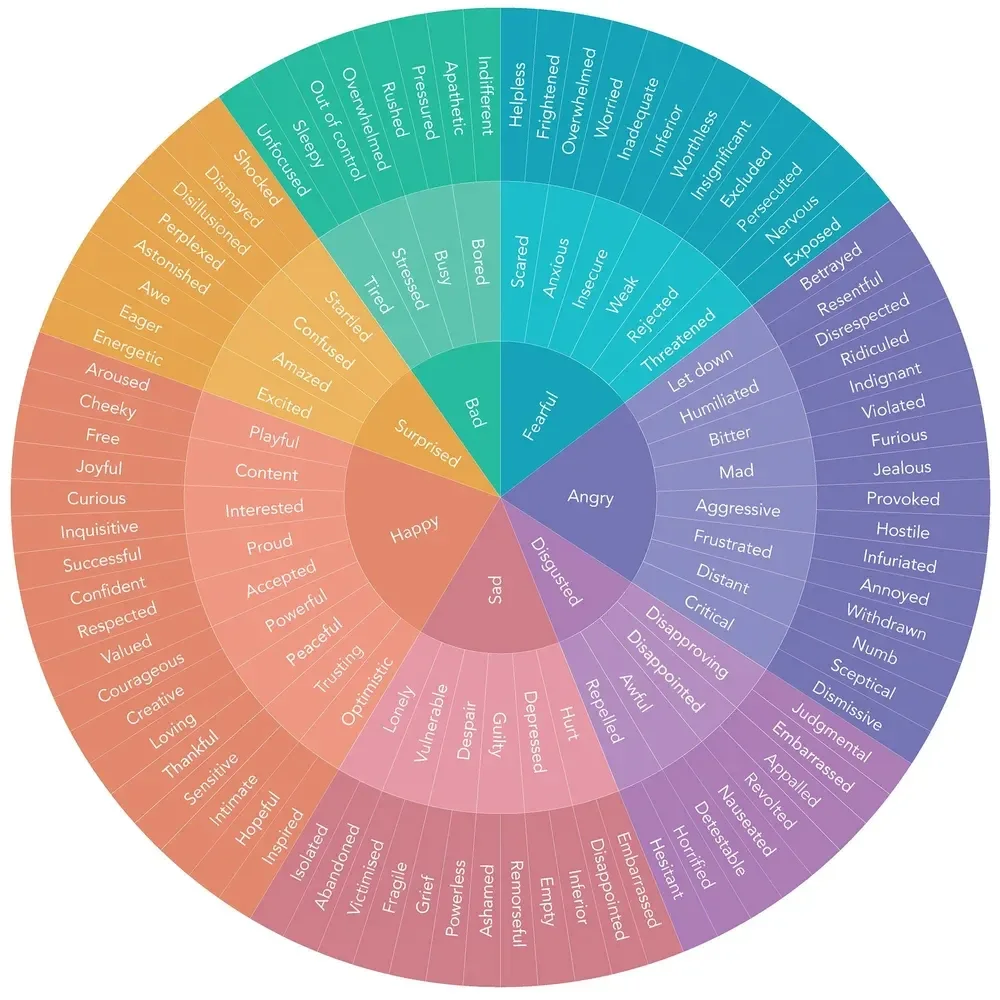
Feelings Wheel via Calm
We’re in the thick of polycrisis. Genocide. Climate catastrophe. Political gaslighting. Scrolling through the news in 2025 feels like drowning in grief, rage, and helplessness, on repeat. Every day, another blow. Another reminder that the systems around us are not built for our collective care. From the ongoing wars to wildfires choking our skies to the relentless attacks on democracy at home, the weight of this moment is undeniable.
Throughout history, periods of radical change are often preceded by moments of intensification — when pressure builds, cracks widen, and the truth becomes impossible to ignore. Right now, it feels like we’re living in one of those moments, with tension simmering just below the surface. And in the midst of all this, I keep wondering: what will it take for us not just to survive this moment, but to meet what’s on the other side of it with intention and reimagined approaches?
In this turbulent time, we need to prepare ourselves to meet the future that’s on the other side of this dystopian nightmare. adrienne maree brown reminds us that we must practice the liberatory future we want to live in now so that when we arrive there, we’re not strangers to it. We’re ready because we’ve already been becoming it.
Recently, I read Prentis Hemphill’s What it Takes to Heal. Their words reminded me that healing in these unsettled times isn’t optional — it’s essential. And not the faux healing sold to us through capitalism (no shade if you like a bubble bath), but the kind that is messy and uncomfortable. The kind that pulls up everything we’ve buried and asks us to deal with it. The work of creating a liberatory future is also the work of embodiment, of real self-care, of transformation from within.
In our work, we say: hurt people hurt people. If we don’t look at our wounds, we carry them into every space we occupy, whether we mean to or not. But we live in a culture that teaches us to hide, suppress, or numb our emotions. We’ve normalized turning away from discomfort. Capitalism thrives on us staying numb: bingeing content, retail therapy, chasing productivity, overworking, scrolling endlessly, or turning to substances that dull the edges of our pain.
But our feelings don’t go away just because we ignore them. As Sonya Renee Taylor says, when we don’t acknowledge what we’re feeling, it doesn’t just disappear — it shows up later in ways we never intended. So, where do we start?
We begin with our feelings.
Our emotions are information. They’re messengers telling us what needs tending. And yet so many of us were never taught (or we forgot) how to sit with them. To name them. To honor them.
This is where we need a reeducation, not just for our individual wellness, but for our collective survival. And we can see glimpses of it already: neighbors showing up in mutual aid networks, organizers making space for both grief and celebration, families daring to have honest conversations across generational divides even when it’s uncomfortable. These are not small things; they are practice for the world we’re trying to build.
Because emotional literacy isn’t just soft work — it’s strategy. It’s organizing. It’s how we build relationships rooted in trust and care. It’s how we stop reproducing the very harm we say we want to dismantle.
What if every movement space had space for grief? What if our meetings welcomed frustration and anger, not as a threat, but as a signal for change? What if naming our feelings was as normal as checking in on the agenda? What if, before we mindlessly picked up our phones, we paused to ask ourselves: What do I actually need in this moment?
This kind of change doesn’t begin with grand gestures — it starts in small, everyday moments. We pause before reaching for our phones and ask: What am I feeling right now? We journal, even if it’s just a sentence, or take a few breaths to let our bodies catch up with our hearts. We check in with a friend, not just with “How are you?” but “What’s been sitting heavy on your heart lately?” We create space in our meetings or family dinners for real emotional check-ins — naming joys, frustrations, or grief before diving into logistics. We give ourselves permission to cry, to rage, to rest, and we normalize this for each other. Sometimes it looks like a workplace that starts staff meetings with a grounding or breathing practice, acknowledging that the realities of 2025 cannot be dropped at the door or kept in the Zoom waiting room. Sometimes, it looks like a neighborhood potluck where people make time to share not just food but also the struggles that they’re facing and strategize on how the community can provide support. Sometimes it looks like a text thread where friends can drop a voice memo about their day, and know it will be heard without judgment. We build the muscle of feeling, one moment at a time, because the future is built in the present.
When we build this muscle, we’re not just tending to ourselves; we’re shaping communities that welcome people to feel what is theirs to feel. Spaces where rage, joy, grief, and tenderness can exist without judgment. Where feelings are not seen as weaknesses, but as data, possibility, and direction. This is how we clarify and catalyze what our emotions are trying to tell us. This is how we push past the fear of discomfort and instead build brave, honest spaces for connection and transformation.
And part of creating these spaces is remembering that honoring feelings is not the same as emotional dumping. Feelings deserve room, but they also deserve care in how they’re shared. It matters that we examine our power and privilege before placing our emotions on others. If you’re in a position of power, modeling vulnerability can open doors, but it should never become a burden for those with less power to carry. In any context, consent is key. Sharing how we feel can be a powerful act of connection, but only when it’s grounded in mutual respect and the willingness to listen as much as we speak.
This isn’t some far-off dream. It’s something we can practice right now — in our households, our organizing spaces, our workplaces, and our neighborhoods. Because the world we’re trying to build needs us whole. And being whole starts with feeling.