Yes, Vote. But We’re Beyond Just Voting
By: Jess Ayden Li, Co-Founder & Principal Consultant
We’ve been told time and time again — if you don’t like what you see, go and vote. But voting is a privilege when you live in states like Texas, where voter suppression is alive and well. And if you’re not a U.S. citizen or if you’re under the age of 18, voting isn’t an option at all.
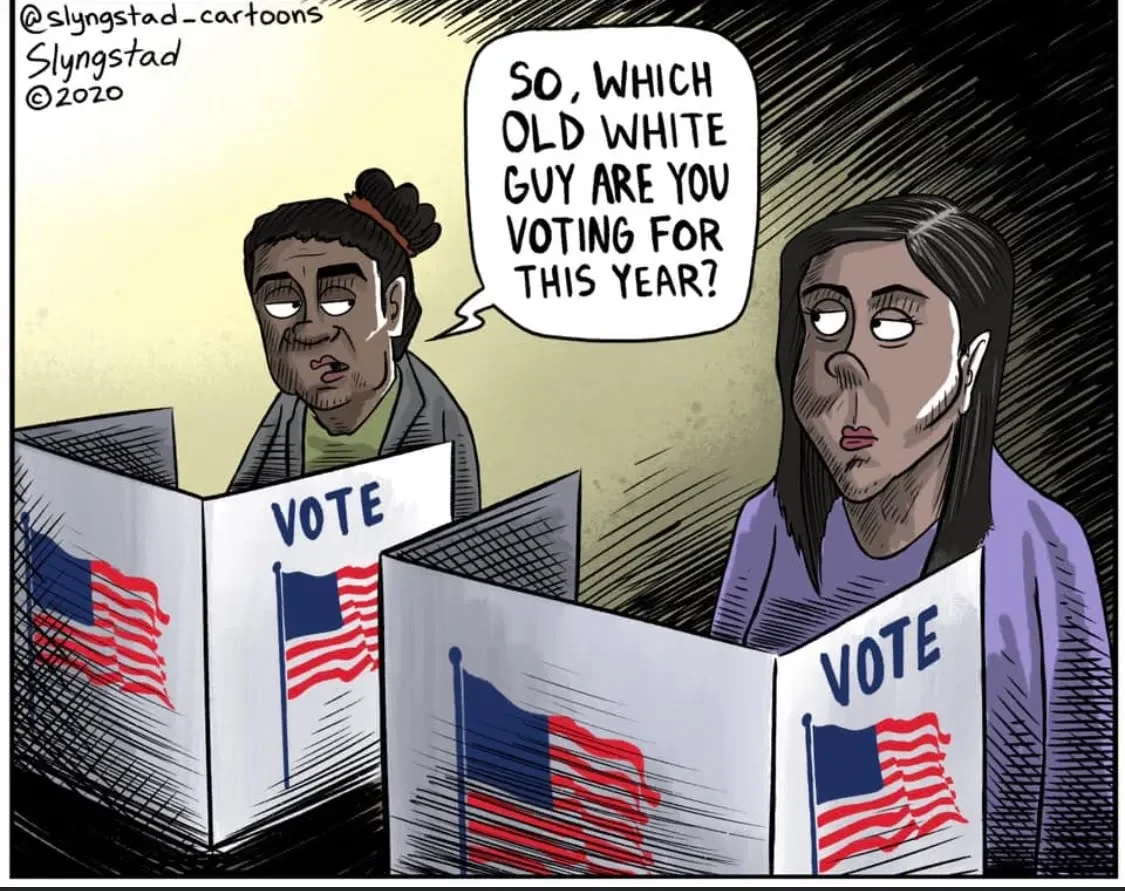
Credit: @slyngstad_cartoons
Voting is not the solution to correcting the political divide or correcting the injustices in this country. It is only one of the many things we need to do as a country. We can’t buy into the “only one right way” ideology that has been pushed forth for so many years that if we vote, then all will be well. We also can’t just assume safety from injustice because we live in a Blue state. In fact, it is actually in Blue states where we’ve seen more incidents of police brutality against Black people or sentiments of Anti-Asian hate.
Let’s face it. Most of us vote only in Presidential elections. And most of us vote straight down a party line. And only a few of us actually thoroughly researches each candidate to determine if we should vote for them or not (think: school board candidates, judges). And when we have an Electoral College system (based on oppression) that is still in place for the Presidential election, how can we expect young people to be bought into participating in a system that so badly needs to change?
And so, what can we do? When the Supreme Court finally published the Roe v. Wade decision in June 2022, some of us who live in progressive states said, “Thank goodness we live in California,” or “My employer says they’ll cover the costs for employees who want to travel for abortion,” and “I can offer up a room for anyone who wants to move or travel here.” While those statements are great, they are also the result of sustaining ourselves after years of oppression. But is it enough?
The list of 2021 SCOTUS (Supreme Court of the United States) rulings included:
Police can violate Miranda rights.
Gun owners have broad freedom to carry weapons in public.
Taxpayer funds can be used for religious education.
Religious prayer in public schools is protected.
State law supersedes Indigenous law on Indigenous land.
Women’s rights to privacy and liberty are not guaranteed in the Constitution. (overturn of Roe v. Wade)
This year, SCOTUS will decide on the following:
Affirmative action
Redistricting in North Carolina
Free speech and Gay rights
A Challenge to the clean water act
Alabama voting rights case
Given how we saw the Court rule this past year, it wouldn’t be surprising to see a further restriction of rights for BIPOC/Global Majority communities in the next year. But there is clearly a slowdown in protests and outrage in public. What happened to the anger and rage that we saw after the murder of George Floyd in 2020? It’s okay to be tired from fighting. It’s normal to feel like we’ve given up or that we don’t have any more energy. Many of us have been called back into work. But we must keep in mind that this fight is heating up more than ever and that voting alone isn’t going to solve everything. Allyship is good. But being an accomplice/co-conspirator is what we really need.
So here are five things you can do today:
Get uncomfortable and start (or continue) having uncomfortable conversations. Most of us can name at least one person (i.e. family member, friend, neighbor, co-worker) who doesn’t understand how white supremacy permeates every facet of our lives and believes that “wokeness” is the enemy. What would it look like for you to have an uncomfortable conversation with them about why diversity, equity, inclusion, and belonging are important?
Be a good troublemaker. Whether it’s in your personal or professional lives, consider where you might be able to interrupt or dismantle systemic oppression. Is it through speaking up at a staff meeting about changing “HR” practices? Or is it about asking your family to recognize Truthsgiving instead of Thanksgiving this year and discuss the oppression of Indigenous communities during Truthsgiving dinner?
Combat misinformation. Recognize and call in or call out misinformation on social media. If you speak a foreign language fluently, use that privilege to combat misinformation. Listen or read the news in a foreign language and contact the reporters if they are spreading misinformation to your community.
Get involved in politics. Either support a local candidate through canvassing, fundraising, or door-knocking. There are more BIPOC candidates today than there were 10 years ago. Find out who is running for office in your community and contact them to see how you can support them.
Put your money where your values are. For folx who have the means, use your wallet to donate to your local BIPOC-led grassroots organizations that are working to center those most impacted and pushing for equitable policy change.
Lastly, if you can vote, then vote in ALL elections and not just for the Mayor, Governor, and President. Vote for the judges, the assembly members, and the School Board members. Research them thoroughly before you select someone.
Our time is now. If we don’t act now, we will not have a better future. Our kids will not have a brighter tomorrow. So what are you going to do about it?